When a child is not talking: what it means and what helps
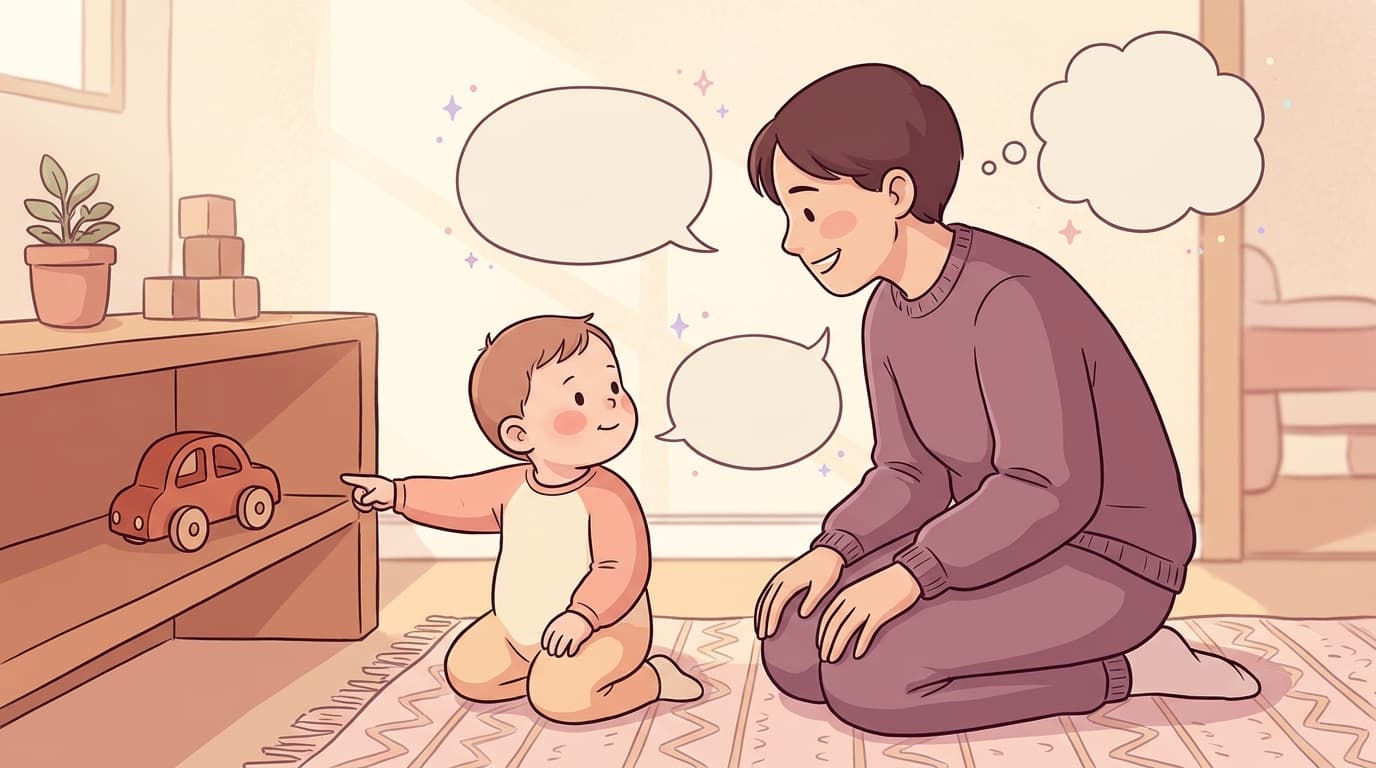
"Just wait, they will grow out of it." Almost every parent worried about their child's speech has heard this advice. Sometimes children truly are late talkers who catch up. Children develop across a wide normal range. Yet waiting without checking carries a real cost: early brain plasticity is strongest in the first years, and support is far easier to put in place early than years later.
This guide is not a diagnosis. It is meant to help you distinguish reasonable patience from signs that deserve an early evaluation.
General speech and communication milestones
These are broad clinical reference points (aligned with speech-language therapy guidelines), not pass-or-fail rules. If several milestones for your child's age are missing, a professional check-in is worthwhile.
| Age | Typical communication signs |
|---|---|
| 12 months | Varied babbling, waving or pointing, responding to their name, first word approximations emerging |
| 18 months | Several single words (often 10 or more, including word approximations), pointing to share interest, following simple everyday instructions |
| 2 years | Around 50 or more words and starting to combine two words ("more milk", "mummy come") |
| 3 years | Three-word sentences and simple questions; speech understood most of the time by familiar family members |
| 4 years | Longer sentences, asking "why" and "how", telling short stories; speech mostly understood by unfamiliar listeners |
Signs that deserve prompt attention
Speech-language pathologists look closely at these signs regardless of exact word count:
- Losing words or skills the child previously had. Regression at any age always merits a prompt medical and speech evaluation, without waiting.
- Few or no communicative gestures. Pointing to show you something interesting, waving, or reaching normally develop before speech. Missing gestures tell clinicians more than a small word count alone.
- Inconsistent response to their name or everyday sounds. Hearing should always be checked first, even if you think they hear fine; fluid behind the eardrums can muffle speech without causing obvious pain.
- Limited attempts to share attention or communicate. A child who pulls your hand, looks back and forth between you and a toy, or uses sounds to signal a need is actively trying to communicate. A child making very few attempts benefits from early specialist support right away.
Evidence-based strategies you can start at home today
Waiting for an assessment appointment can take weeks or months. In the meantime, these clinician-backed everyday habits genuinely help:
Comment instead of quizzing. It feels natural to ask "What's that? What colour is it?", yet constant questions feel like a test and give the child no new vocabulary. Narrate what they are already looking at instead ("Look, a big red car! The car goes fast!").
Wait a full five seconds. Adults typically wait less than one second before jumping in. A child who needs extra motor or language processing time often needs five to ten calm seconds. Count them silently; you will be amazed how many more responses appear when you leave space.
Create playful, low-stress reasons to communicate. Keep it fun and never withhold meals or comfort items. Instead, use gentle everyday opportunities: blow bubbles and close the lid loosely so they can signal "open" or "more", pause briefly while pushing them on a swing to invite "go", or hold up two snack choices so pointing or tapping has immediate meaning.
Repeat and expand without correcting. When your child says "car" or points to a car, respond warmly: "Yes, red car! The car is going!" You confirm you understood them and model the next linguistic step without making them feel wrong.
Where AAC fits (and why you do not need to wait)
Many parents hesitate here: if my child is still learning to talk, isn't it too early to introduce pictures or a speech app?
Speech-language research is clear: introducing AAC early does not delay or prevent speech, and frequently supports spoken language growth. A toddler or child who has clear thoughts and needs but no reliable way to share them builds up intense frustration. Much crying, throwing, or distress happens simply because communication has broken down.
Offering simple AAC (gestures, picture boards, or an app with a few core words like "want", "no", "more", "help", "hurts") lowers that pressure immediately while spoken language continues developing alongside it.
Who to see first
Start with your paediatrician and request a formal hearing test (audiology) and a referral to a speech-language pathologist (SLP). In many regions, early intervention services accept direct parent self-referrals for toddlers without requiring a formal diagnosis first. If your child attends nursery or kindergarten, ask their teachers what they observe during play and group time.
Getting support early is never something families regret, and you do not have to wait for a diagnosis to help your child be understood today.
Sources
- American Speech-Language-Hearing Association (ASHA). Developmental Milestones: Birth to 5 Years.
- Centers for Disease Control and Prevention (CDC). Learn the Signs. Act Early. Developmental Milestones.
- Romski, M., & Sevcik, R. A. (2005). Augmentative communication and early intervention: Myths and realities. Infants & Young Children, 18(3), 174-185.
- Schlosser, R. W., & Wendt, O. (2008). Effects of augmentative and alternative communication intervention on speech production in children with autism: A systematic review. American Journal of Speech-Language Pathology, 17(3), 212-230.